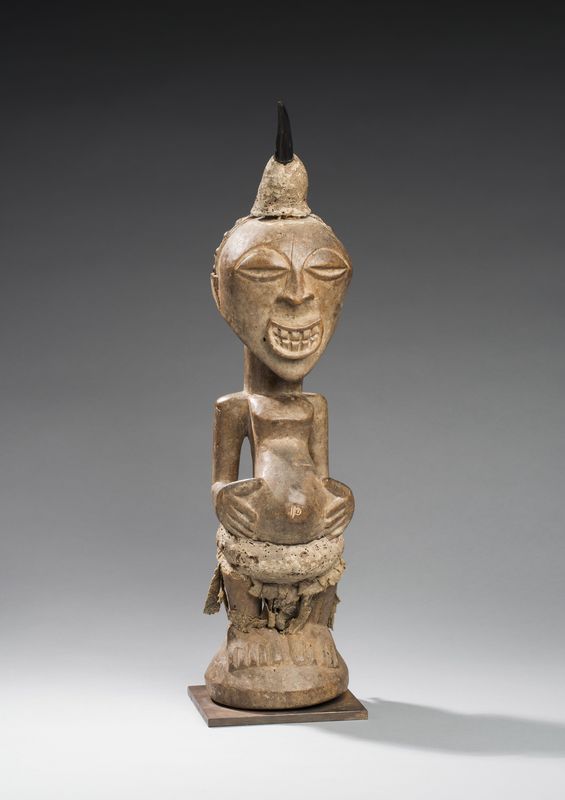
Inauthentic Songye statue - RENO.96
4th quarter of the 20th century. RMCA collection.
This statue is a forgery of mediocre quality. The woodcarver, probably not Songye, has been inspired in a very folkloristic and grotesque way by the classic shapes of an authentic nkishi. The horn, the rusted ornamental nails, and the worn-out loincloth lead the naïve buyer to believe that he has acquired an authentic, old object, which was used in rituals – just like the specimen with the three horns in this display case.
The trade in non-authentic Congolese artefacts took off in the second half of the 20th century. Unlike in the first half of the century, it is no longer exceptional to be confronted with objects that are supposed to come from a particular Congolese culture, but which, in reality, were made by someone who does not belong to that culture, or does not even come from Congo. For example, we know that since the 1960s, so-called Congolese objects have been manufactured in Cameroon.
